Publications
The ESCXEL Project publications include studies, reports and other outputs produced as part of its activities. These publications reflect the research carried out within the project and its close connection with educational practice.
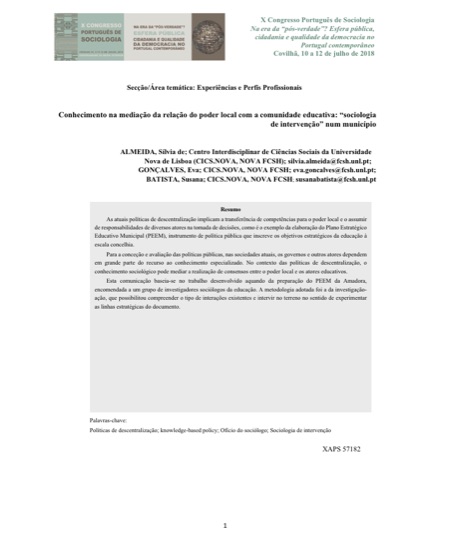
Developed within the framework of the Amadora Municipal Strategic Education Plan, this study examines the transfer of educational responsibilities to local government and the role of sociological knowledge as a mediator in building consensus between the municipality and educational stakeholders. Using an action research approach, the research team not only mapped local interactions involved in the development of this public policy instrument but also worked directly with local actors to test and implement the strategic guidelines defined for the municipality.
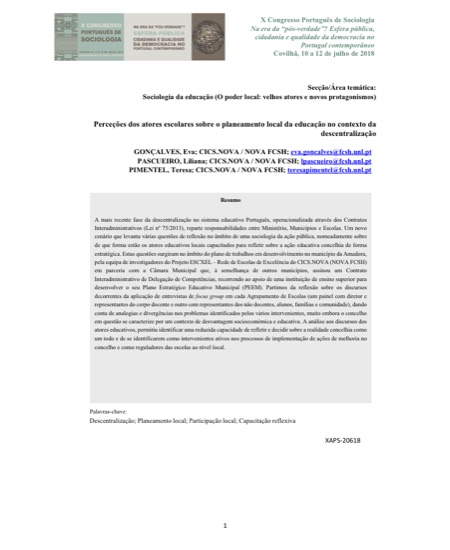
Building on the recent process of educational decentralisation in Portugal (Law No. 75/2013), this study examines the capacity of local stakeholders to participate strategically in the development of the Amadora Municipal Strategic Education Plan, in partnership with the ESCXEL Network. Based on focus groups conducted across school clusters, the findings reveal that, despite the municipality's specific socio-economic context, educational stakeholders display a limited capacity to reflect on and make decisions regarding the municipality as a whole, as well as a weak perception of their role as active agents in improving and governing education at local level.
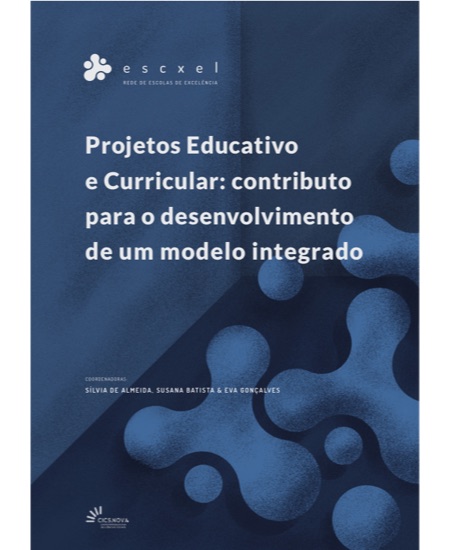
The ESCXEL Network updated its Educational Project model by integrating the curricular and pedagogical dimension, positioning the Curriculum Project as a central instrument for school autonomy and strategic management. By combining research with teaching practice, this approach enables national policy guidelines to be adapted to the specific context of each school, strengthening the Educational Project as a flexible framework for guiding schools through the challenges of educational policy.
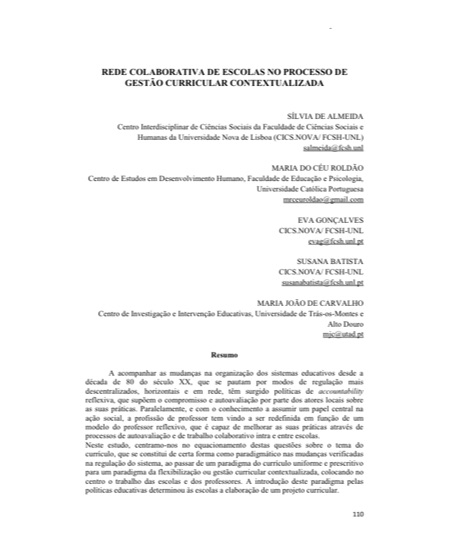
Against the backdrop of increasingly decentralised education systems and the growing recognition of the reflective teacher, this study examines the role of the Curriculum Project as an instrument for contextualised curriculum management in schools. Drawing on qualitative research carried out within the Curriculum Monitor and ESCXEL projects, the findings suggest that the prescriptive nature of these documents and the limited tradition of school autonomy constrain their strategic value. Nevertheless, participation in collaborative networks emerges as a promising means of strengthening contextualised curriculum practices.
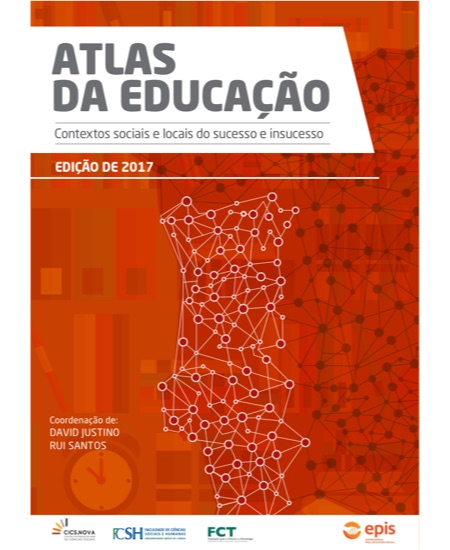
2017 Edition
Concluding the research programme launched in 2014 through the partnership between CICS.NOVA and EPIS, this edition of the Atlas of Education consolidates and expands previous findings on the influence of social and local contexts on the Portuguese education system. Based on the premise that educational outcomes are shaped by multiple interacting factors and that similar causes may produce different effects depending on territorial scale and regional context, the study adopts a dynamic, longitudinal approach across different stages of schooling, providing a robust cartographic tool to support evidence-informed educational policy.
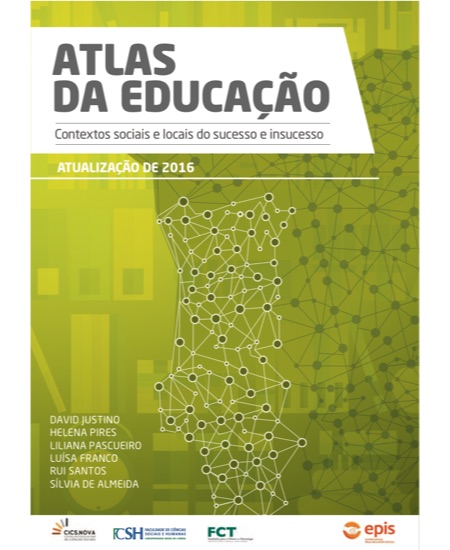
2016 Update
This edition of the Atlas of Education explores the influence of gender, socio-economic context and school organisation on the Portuguese education system, highlighting a persistent female advantage at higher levels of education alongside increasing territorial disparities. In addition to confirming the strong influence of families' educational capital on student achievement, the study identifies teacher workforce stability as the organisational factor most strongly associated with success in national examinations.
Proceedings of the First International Conference of the ESCXEL Project
Reflecting international trends towards educational decentralisation and school autonomy, this conference explored the growing importance of networks and partnerships involving schools, families and local communities. Drawing on the concepts of social capital and collaborative governance, it brought together researchers and practitioners to examine how such networks are organised, how they contribute to educational success, and how they shape educational practice and policy.
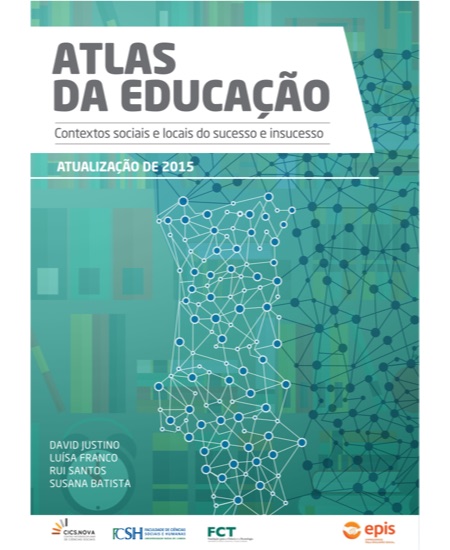
2015 Update
This update of the Atlas of Education focuses on the analysis of national examination results at lower secondary (Year 9) and upper secondary levels across municipalities in mainland Portugal. It introduces important methodological improvements, including the replacement of absolute averages with a base-100 index referenced to the national average, thereby eliminating annual variations in examination difficulty. The study also incorporates both public and private schools and analyses performance trends between 2009 and 2014.
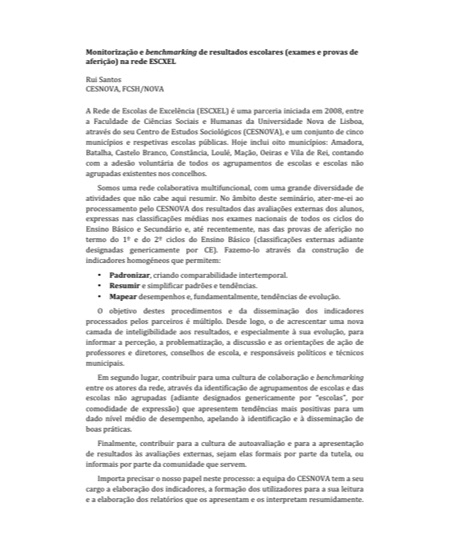
The ESCXEL Network monitors external assessment outcomes through standardised indicators that benchmark school performance against the national average, minimising variations in examination difficulty while comparing internal and external assessment results. Using visual scoreboards that combine performance levels with improvement trends, this methodology supports school self-evaluation and collaborative benchmarking, fostering the sharing of effective educational practices across the Network.