Publications
The ESCXEL Project publications include studies, reports and other outputs produced as part of its activities. These publications reflect the research carried out within the project and its close connection with educational practice.
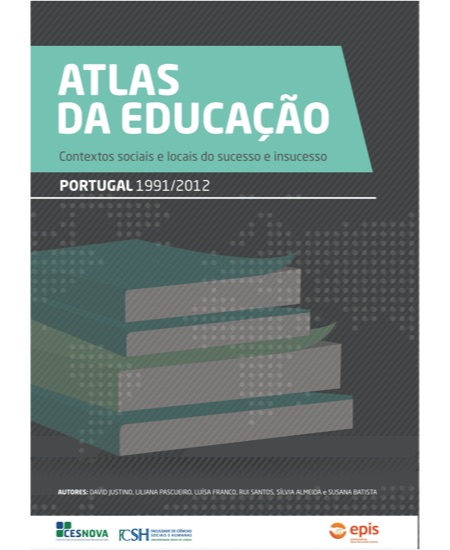
Portugal, 1991-2012
Commissioned by EPIS, this study identifies, through robust scientific evidence, the municipalities in Portugal where school dropout and educational underachievement—understood not merely as school-level issues but as expressions of broader social exclusion and shared community responsibility—are most pronounced. Combining Census data (1991–2011) with national examination results, the report maps the socio-economic and territorial dynamics influencing educational outcomes, using statistical models to identify contexts where schools succeed in overcoming the constraints imposed by social disadvantage and to support evidence-informed intervention.
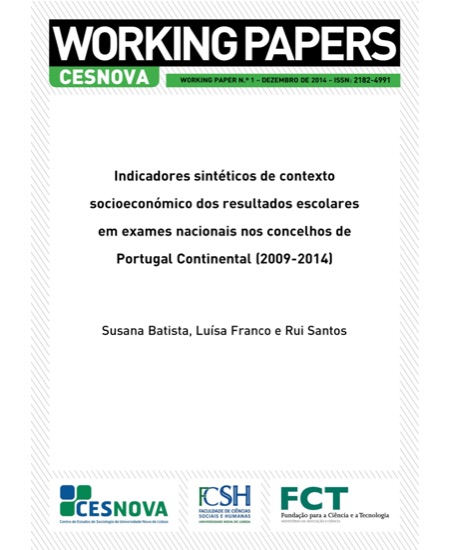
This working paper proposes a methodology for constructing synthetic indicators of municipal socio-economic context based on multiple linear regression models applied to national examination results at lower secondary and upper secondary levels. By demonstrating the significant influence of local socio-economic conditions on educational outcomes, these indicators provide a reliable and concise measure for contextualising school performance and supporting future research, with the potential to extend the methodology to primary education and other units of analysis.
Vocational Education: Contexts and Constraints in Planning Educational Provision Marina Peliz (2013)
Focusing on upper secondary vocational education (Level 4 qualification), this study examines the context and planning constraints associated with developing educational provision that, despite its organisational complexity and the additional demands placed on schools, has contributed significantly to increasing participation in education in Portugal. The analysis considers the provision of vocational courses across public and private schools within the ESCXEL Network between 2006 and 2014.
Parental participation in formal school governance structures is a relatively recent development in Portugal, where families share responsibility with the State through General Councils, Class Councils and Parents' Associations. This study explores how school leaders and presidents of parents' associations perceive and put this partnership into practice within a context characterised by voluntary participation, traditionally low levels of civic engagement and a longstanding culture of schools operating in relative isolation from their communities.