Publications
The ESCXEL Project publications include studies, reports and other outputs produced as part of its activities. These publications reflect the research carried out within the project and its close connection with educational practice.
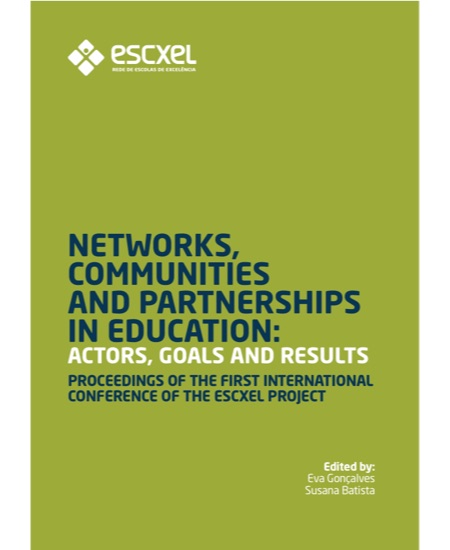
Proceedings of the First International Conference of the ESCXEL Project
Reflecting international trends towards educational decentralisation and school autonomy, this conference explored the growing importance of networks and partnerships involving schools, families and local communities. Drawing on the concepts of social capital and collaborative governance, it brought together researchers and practitioners to examine how such networks are organised, how they contribute to educational success, and how they shape educational practice and policy.

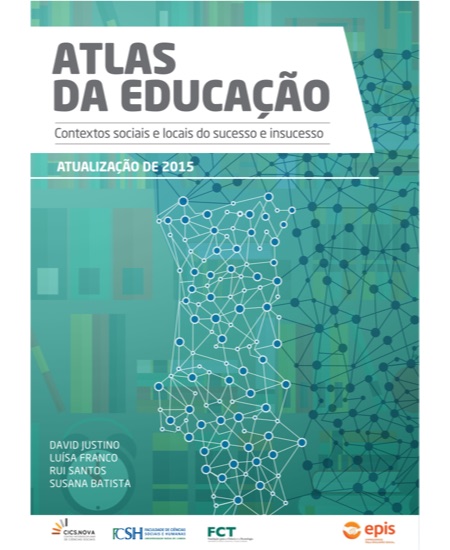
2015 Update
This update of the Atlas of Education focuses on the analysis of national examination results at lower secondary (Year 9) and upper secondary levels across municipalities in mainland Portugal. It introduces important methodological improvements, including the replacement of absolute averages with a base-100 index referenced to the national average, thereby eliminating annual variations in examination difficulty. The study also incorporates both public and private schools and analyses performance trends between 2009 and 2014.
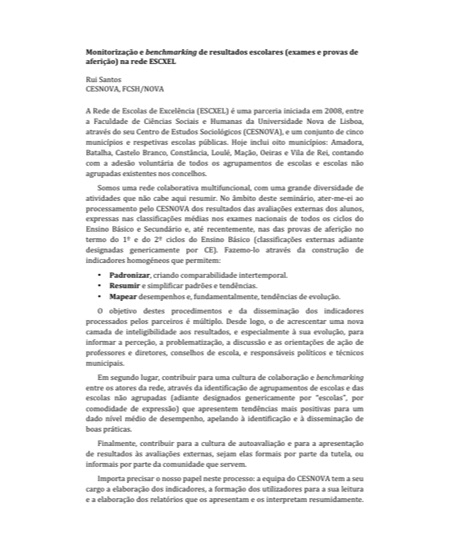
The ESCXEL Network monitors external assessment outcomes through standardised indicators that benchmark school performance against the national average, minimising variations in examination difficulty while comparing internal and external assessment results. Using visual scoreboards that combine performance levels with improvement trends, this methodology supports school self-evaluation and collaborative benchmarking, fostering the sharing of effective educational practices across the Network.
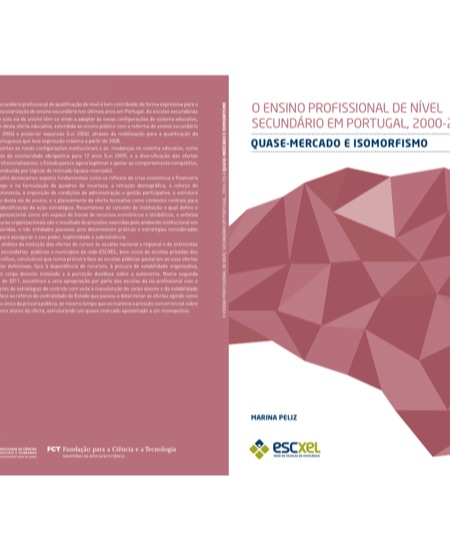
The expansion of upper secondary vocational education in Portuguese public schools—driven by legislative reforms and the introduction of compulsory 12-year schooling—required schools to adapt to an increasingly competitive quasi-market environment. This study shows how schools evolved from an initially defensive stance towards the strategic development of vocational provision from 2011 onwards, ensuring organisational stability and safeguarding teaching staff within a highly regulated education system.